It’s been 11 years, and I feel a bit emotional. Although I’m not someone who likes to write, I want to jot down some words at this moment to record it.
In January 2013, I ended my ten-year stint at my previous company and started looking for entrepreneurial opportunities. At the same time, I was pursuing a Ph.D. at Shenzhen University, working on my thesis. The topic at that time was the optimization and acceleration of the TCP/IP protocol, with a related product being a mobile internet acceleration app. Under the 2G/GPRS environment, there was indeed some demand for this.
By June 2013, with 3G approaching and internet speeds rapidly increasing, the demand for mobile internet acceleration had greatly diminished and was no longer worth pursuing. I was then interested in two directions: one was recreational drones that could follow their owners and take pictures from various angles — there were no such products at the time, so there was an opportunity; the second was Bitcoin. While researching encryption materials online, I accidentally came across articles about “Crazy Xiaoqiang” and Li Xiaolai’s Bitcoin investment surging by 6,000 times, which immediately caught my interest. I spent half a month reading the Bitcoin white paper and other articles, downloaded the code, and ran it. I was amazed by the genius idea of creating perfect money through code — it was so fascinating! From then on, I plunged into the industry, and my research direction shifted to Bitcoin anonymity and de-anonymization technologies.
In July, while helping a friend assess an investment project, I happened to meet the famous angel investor Mai Gang. We casually talked about Bitcoin. Mai Gang, with his finance background, had extremely precise and forward-thinking views about Bitcoin — for example, he mentioned the idea of national reserve currency, which has now become a reality. I must say, he was a true Bitcoin sage. He greatly reinforced my desire to work in the Bitcoin field. He told me he had invested in OKCoin and introduced me to Star Xu. I immediately withdrew all my stock market funds and bought 800 Bitcoins from okcoin.com at $90 each.
These 10 Bitcoins are part of those original 800. Unfortunately, the rest were squandered — through various coin swaps, losses, and eventually selling coins to pay salaries during my startup years. Within just a few years, they were all gone. “The first Bitcoins you ever owned will be the most you ever have in your life,” they say — and that’s so true. Why overcomplicate things? Doing nothing might’ve been the winning move…
There’s a reason why these 10 Bitcoins remained. In January 2014, I withdrew 10 Bitcoins to buy 200 million Dogecoins on BTC38, and one or two months later, I sold them on mintpal.com, turning the 10 Bitcoins into more than 60. I withdrew 12 Bitcoins as my principal and left over 50 to continue trading altcoins — but half a month later, Mintpal collapsed! From then on, I became one more member of the Mintpal victims group…
After transferring the 12 Bitcoins to Bitcoin Core, I set a 26-character password, which was very complex. I saved the password in an open-source password manager, intentionally introducing three small errors. Half an hour later, I thought — “Wait, what were those three small errors again…?” Just like that, I forgot the password. It wasn’t worth much money at the time, so I didn’t bother trying to recover it.
Until 2020 — after I had made money by luck, lost it all by skill, fallen into debt, and finally dissolved my team, leaving only myself — I had plenty of time and could finally calm down to work on password recovery. This was something I truly enjoyed, and it fit perfectly with my background in cybersecurity and cryptography.
I wrote a cracking program in C/C++, created a password dictionary based on my memory, and ran it using a lousy CPU. After one month, I succeeded!!! Seeing the password on the screen, I was overwhelmed with emotion — seven years! Seven years! Do you have any idea what those seven years were like for me??? I then used 2 Bitcoins to pay my employees part of their salaries, leaving me with only 10.
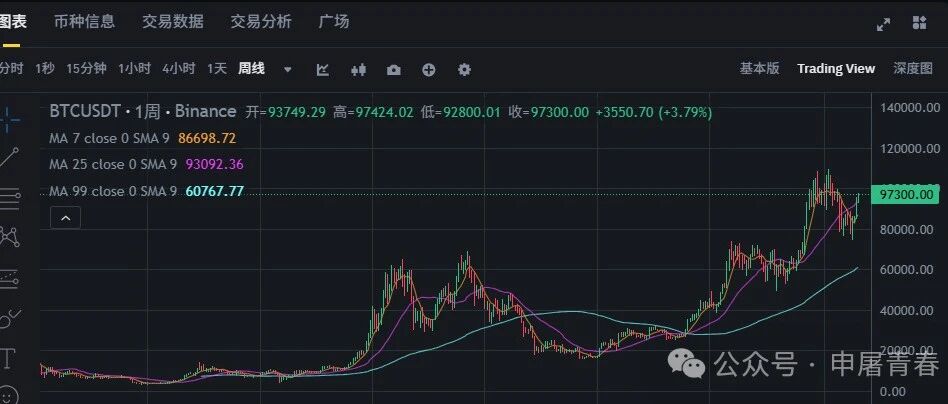
Eleven years — from $90 to $90,000, a thousandfold increase. That’s enough. Don’t try to earn the last cent, or you might lose the ones you already have.
This experience gave me a great insight: as Bitcoin’s price rises, lost cryptocurrencies become more valuable, and recovery services will become a viable business.
The recovery business has some distinctive requirements. You need:
(1) Technicians who have seen real money. Otherwise, they might not resist the temptation of enormous wealth and could easily keep the funds for themselves after recovery.
(2) No need for a team. Even if the team leader resists temptation, the technicians might not withstand the test of human nature. Moreover, recovery has a very low success rate — it’s common not to succeed even once a year, making it impossible to support a team.
(3) A safe and stable location. Sometimes, to build customer trust, offline meetings are needed — but that can also lead you into traps set by others.
By comparison, I have the following advantages:
(1) I’ve seen big money and now seek inner peace. I wouldn’t give up my calm life to do anything illegal for money.
(2) I’m technically strong and trustworthy. I hold a Ph.D. in cryptography, have been in the blockchain industry for 11 years, and have worked on password recovery for 5 years. My personal reputation has always been good, with no negative records.
(3) I don’t need a team. I can handle most of the work alone. Other technicians only provide temporary assistance and don’t have access to core secrets.
(4) I live in Singapore, which is safer than China. Meeting in person is fine here — both the client’s coins and personal safety are well protected.
For these reasons, I believe I have a strong advantage in this field. So, I added hundreds of GPUs and assembled dozens of machines to build recovery computing power, officially starting my recovery business. Although I know mining is more stable, I don’t enjoy it. I prefer the challenges and surprises of password recovery — and I’ve done it for five years now.
Over these five years, I’ve witnessed the joys and sorrows of many clients. I love hearing their excited voices, seeing their astonished faces, the string of exclamation marks in their messages, and even some clients kneeling to thank me. I’ve also learned a lot about their lives — some were single mothers raising children alone, unable to pay tuition; after successful recovery, they trembled with joy. Some had worked for decades at small institutions with low pay, living difficult lives — after recovering their wallets, they bought two apartments and entered comfortable living. Some were teachers struggling for decades, having lost hope of ever recovering their wallets — after success, they bought cars and villas, transforming their social class.
The success rate of wallet recovery is very low, yet many clients rest their hopes upon me, wishing I could recover their wallets immediately and change their fate. My answer is always: I’ll do my utmost! Because I remember the joy when my 12 Bitcoins were recovered, I know how much it could change their lives. So — for both them and myself — I must give it everything I’ve got…
All these experiences made me feel that I’m helping clients solve urgent problems, improve their quality of life, and achieve upward mobility. Therefore, to those who have forgotten their wallet passwords — don’t give up hope. The light is just ahead, waiting for you.
This is my story with 10 Bitcoins. Farewell, my 10 Bitcoins — may you bring your new owner more surprises and happiness.
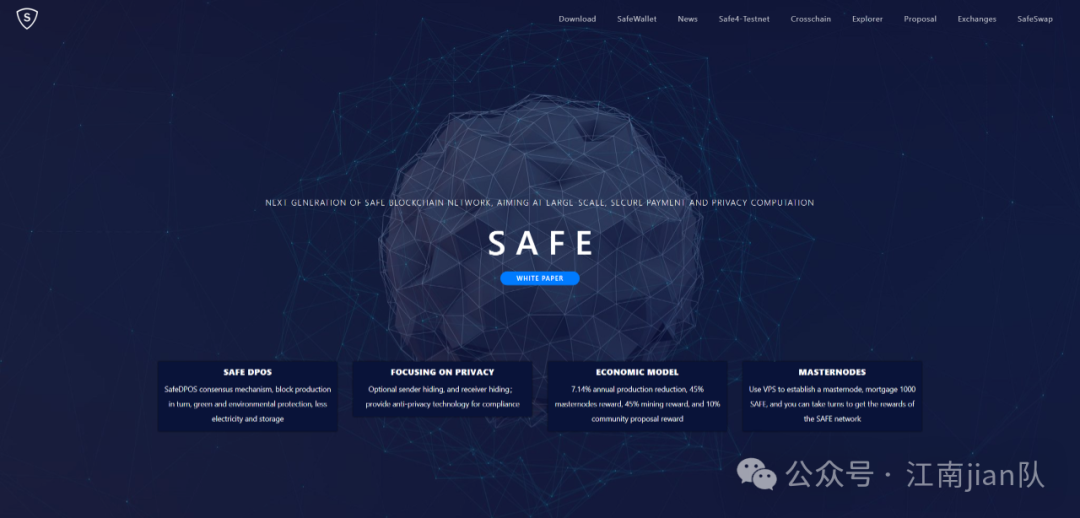
Author: Shen Tu Qingchun, CEO of Shenzhen Yinlian Technology Co., Ltd., Executive Deputy Secretary-General of the Golden Chain Alliance, CEO of Shenzhen Yinlian Technology, High-level Talent of Shenzhen City, Expert for Shenzhen Government Procurement Project Evaluation. Winner of the 2008 Shenzhen Science and Technology Innovation Award and the 2011 Shenzhen Science and Technology Award, admitted as a Ph.D. candidate at Shenzhen University in 2011. Since 2014, he initiated the SAFE project (handle @safeanwang), which has continued for 11 years. In April 2025, after three years of development and testing, SAFE4 was launched.