1. Introduction
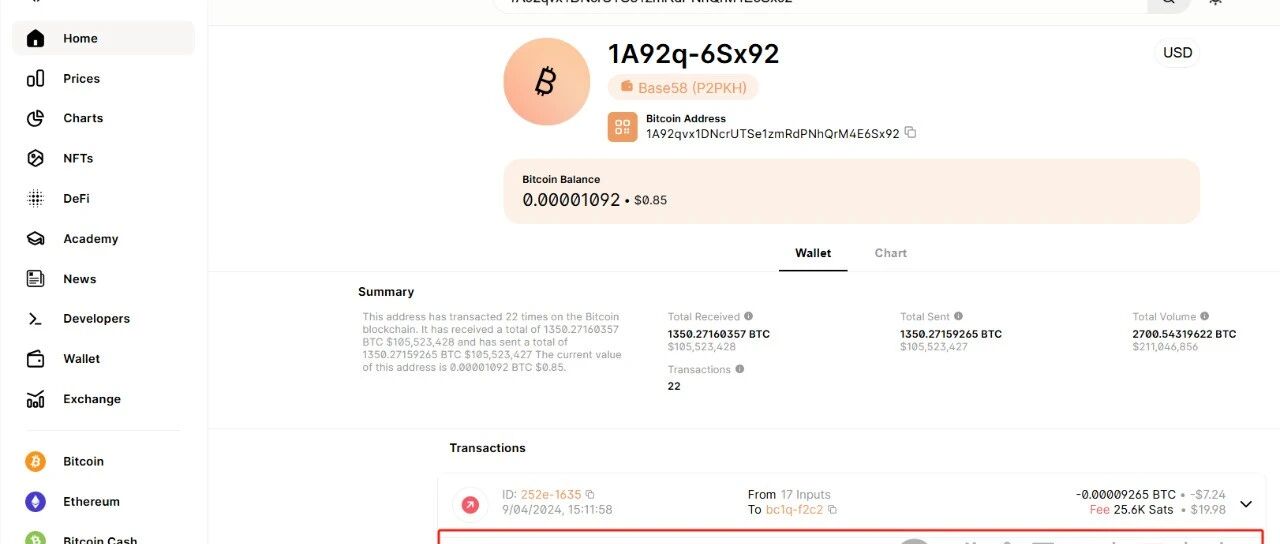
You’re not mistaken — this isn’t clickbait or hype; it’s true. The BTC address is 1A92qvx1DNcrUTSe1zmRdPNhQrM4E6Sx92, successfully recovered on September 4, 2024.
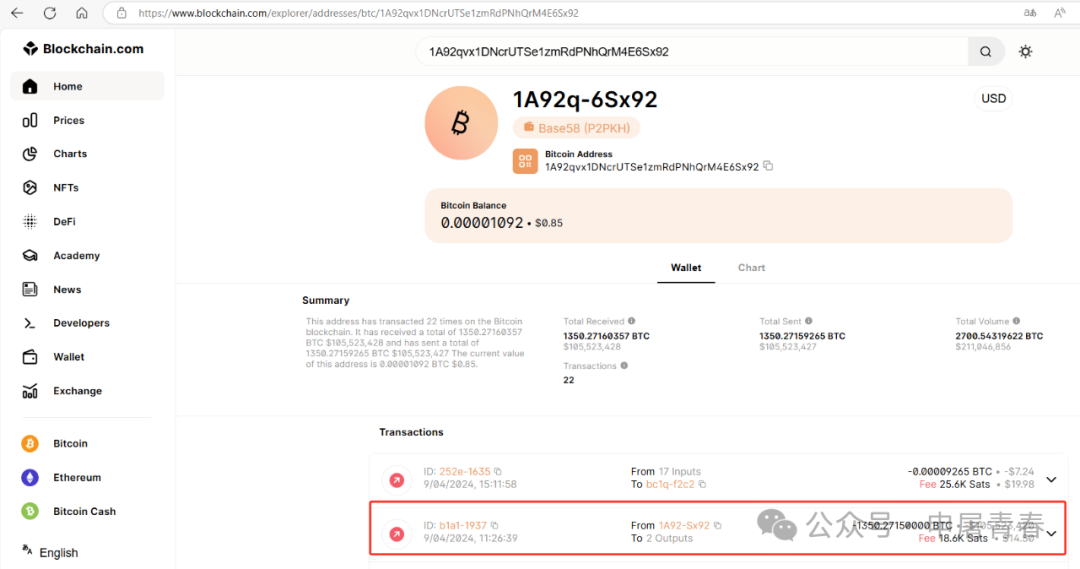
I didn’t intend to make such a high-profile announcement. A few friends guessed that it was me who recovered it, but I didn’t confirm. Now I feel it’s nothing to hide — it’s something to celebrate and remember, so I’m writing this article as a record.
The client is a foreigner who bought a Trezor hardware wallet in 2016, created a private account, set an advanced password, and stored 1,350 BTC inside.
In 2019, the client forgot the password and started seeking help for recovery. Someone tried using electronic key input through the Trezor developer interface to brute-force it, but the speed was extremely slow — after half a year without success, it was abandoned.
2. Taking the case
In early July 2024, the client found me through an introducer, and we quickly agreed on a price. We immediately finalized the recovery plan, which required disassembling the device to read data directly from the chip. So we purchased related chips, equipment, and tools for Trezor wallet recovery from Singapore and China, as well as 10 Trezors for practice.
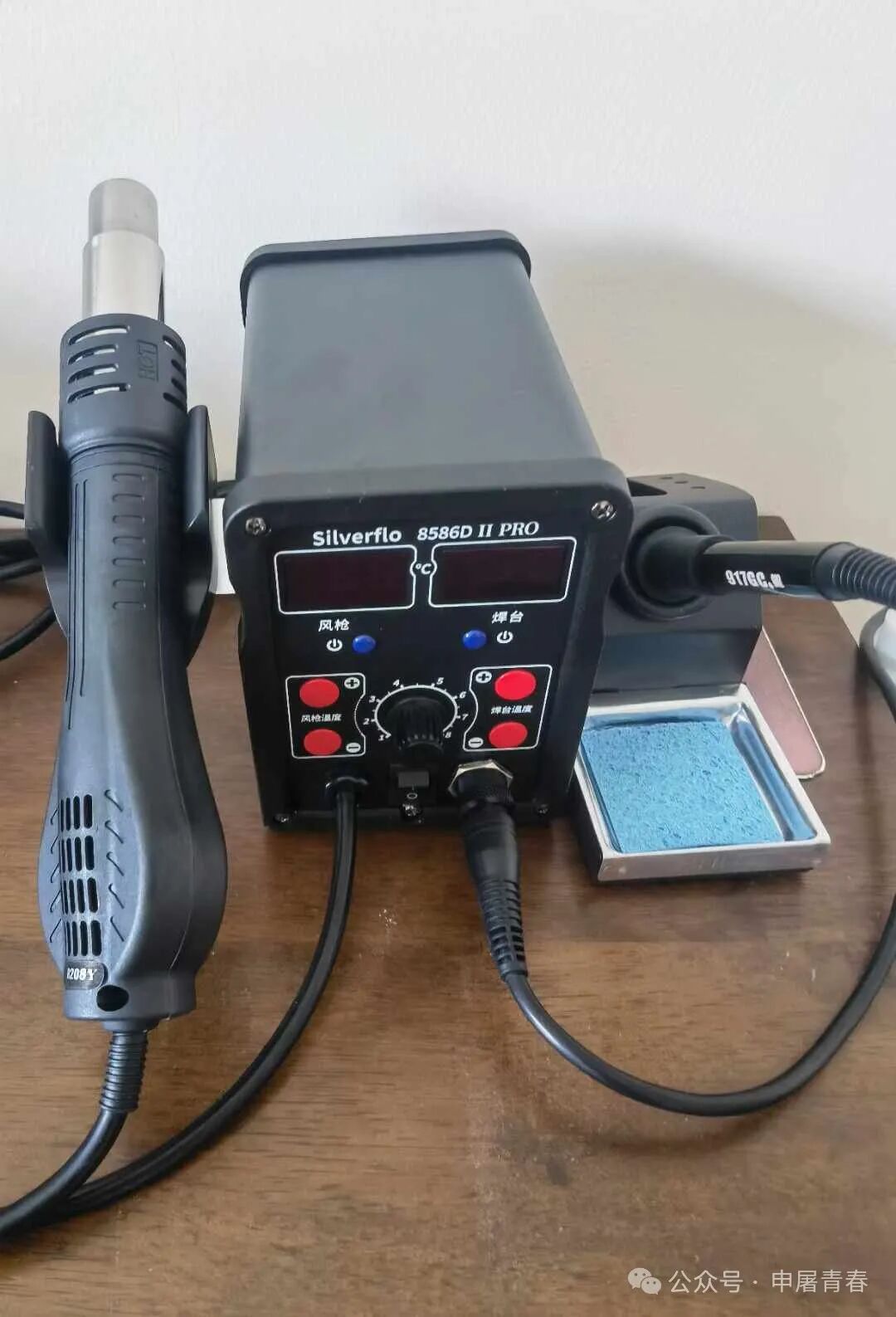
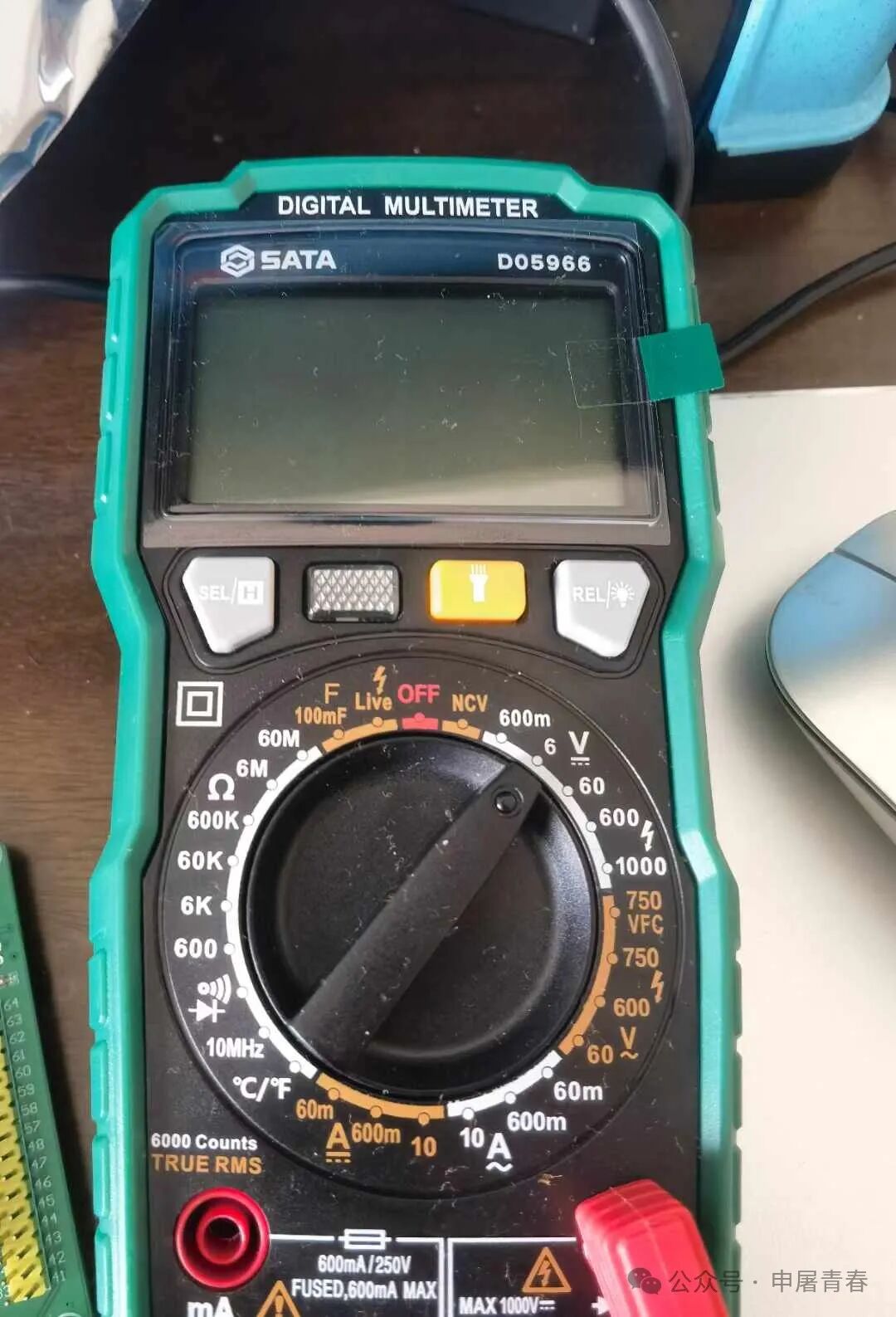
Although I already understood some chip soldering techniques, I had little hands-on experience, and theory differs greatly from practice. So we put in serious effort learning to solder. After half a month of day-and-night practice, we became proficient in using welding guns, heat guns, embedded boards, oscilloscopes, chip programmers, chip burners, programmable power transformers, and various other tools. We used scrap boards to practice chip soldering — not becoming masters, but good enough.
We also practiced chip data recovery. Although we understood the principles and process, we lacked real hands-on skill. So we bought relevant chips, equipment, and tools, crammed countless hours of knowledge on voltage and circuits, built and soldered cracking circuits, and ran countless experiments — eventually becoming skillful at reading data from Trezor chips.
After reading the chip data, we had to decrypt it and recover the password. This required two weeks of technical research, during which we wrote data decryption and password recovery programs, then optimized the GPU recovery algorithm, greatly improving efficiency.
At the end of July, the introducer brought two Trezors of the same model for testing. He set the PINs, passwords, and mnemonics himself without telling us. After 2–3 days, we read the data and, based on the clues he gave, successfully recovered the password — restoring the client’s hope for success.
In mid-August, the client personally set up another Trezor of the same model — with a new PIN, password, and mnemonics that even the introducer didn’t know, only the clues. The client sent this Trezor through the introducer for recovery. This time, it took just 3–4 hours to read the data and recover the password. The client was now fully confident in our technical ability.
3. The Recovery
In early September, after agreeing with the client, we moved into a hotel with him and the introducer, signed the contract, and began recovery. Within three hours of receiving the wallet, we accurately extracted the chip data. After decrypting it, we ran our GPU recovery program with all available computing power, using the client’s password clues.
After 24 hours, despite multiple adjustments to the password generation strategy, nothing worked. Everyone was anxious. The client planned to leave if it wasn’t solved by the third day, while we planned to move to another hotel and keep working — if nothing came up in two weeks, we’d give up.
On days two and three, we repeatedly reviewed the password clues with the client and introducer. Over breakfast on the third day, we discussed again, simplified some patterns, and ran another test. After 1–2 hours with no result, the client went to sleep. The introducer and I continued searching. I realized there might be redundant clues, so I rewrote a simplified password generation program — a few minutes later, the password appeared!!!
We told the introducer the good news. He was so overjoyed he actually knelt on the bed thanking us. Then he called the sleeping client, who came in to verify it repeatedly — ecstatic. After eight years of waiting, the long-awaited success had finally arrived. Recovery complete — everyone was financially free! Especially the client: he bought BTC in February 2016 at $375 per coin, and now it was $58,000 — 155x growth!
Among the introducer’s contacts were two domestic friends — one a major crypto influencer, another a well-known lawyer who wanted to remain anonymous. We informed both, and everyone was thrilled.
The rest was straightforward. We distributed the agreed shares of BTC among the client, the introducer, and ourselves as per contract, and said our goodbyes. We finished transferring the altcoins that same night. The case ended successfully.
4. Reflections
Reviewing the case: we spent one and a half months studying, coding, and working on chip recovery — mastering it from scratch. It was a real test of patience and learning. With this foundation, we gained solid experience in hardware wallet recovery.
The moment that excited me most wasn’t when the password was recovered, but when the client handed me the wallet. My hands trembled. This was a wallet holding 1,350 BTC — the trust the client placed in me was immense.
Because the recovery method had some uncertainty — though we’d succeeded ten times before and had signed a liability waiver — I still worried something might go wrong and cause huge losses, which would weigh on my conscience.
At the start of chip data recovery, my blood pressure was high — 160/110, measured by my smart watch. I have stage-one hypertension and take medication daily, but excitement is risky. That reading was close to stage two. After one to two hours, it slowly went down, so later I stayed steady even when the password was found.
After this case, smaller wallets don’t get my heart racing anymore. The crypto world truly strengthens your heart — a life test of its own.
During the 1.5 months on this case, I sat 12–14 hours daily in high-intensity learning and constant tension. I didn’t notice any physical issues then.
But once it ended and I relaxed, my coccyx started aching for 1–2 months. I used lots of medicated patches before it eased. That’s the price of success — but well worth it.
Fortunately, everything went smoothly with no mishaps.
5. Postscript
I entered the National Defense Key Laboratory of Cryptography at Shenzhen University in 2011 for a PhD in cryptography. In 2013, I began deep research on blockchain, and by 2019, I was doing wallet recovery — accumulating solid technical knowledge and experience.
At the end of 2020, we invested over a million yuan to purchase dozens of 8-GPU servers with 3080s and 3090s — solely for password recovery.
By the end of 2024, we invested 15 million yuan to buy dozens of 8-GPU 4090 servers, plus many other models for dedicated password recovery computing — no AI, no mining, just password recovery.
Depending on the wallet type, cracking speeds can reach billions to trillions per second.
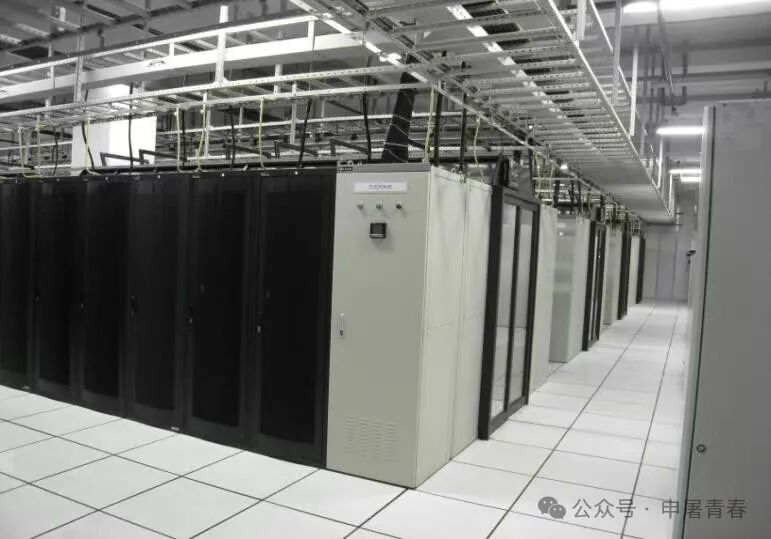
It’s likely that ours is the only team in China with such determination and setup. Password recovery involves handling sensitive client data that must be uploaded to servers.
Without our own computing clusters, client data could be exposed — hence why we invested in fully independent systems for maximum safety.
So far, we’ve successfully helped recover dozens of wallets, with immense total asset value reclaimed.
Being responsible and keeping promises has always been our guiding principle. After each recovery, funds are delivered exactly as agreed — never shorting the client by even a cent, with no exceptions.
Just like our SAFE network project (account @safeanwang), started in 2014 and continuing to this day — 11 years strong.
The money I made trading crypto supported the SAFE project for almost seven years; profits from wallet recovery have sustained it another four years.
As a responsible OG, when I launch a project or business, I back it with my reputation — we never give up.
Now that SAFE4 is about to go live, we believe SAFE will thrive just like our wallet recovery business has.
Reliable people do reliable work — whether in wallet recovery or the SAFE project, we’ll keep doing both well.