Today I had some time to read a few comments and found that most are from newcomers, so I feel it’s necessary to respond to a few viewpoints:
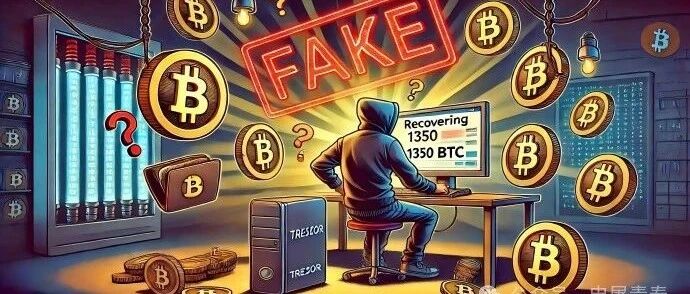
1. If he really cracked 1350 BTC, he would have fled long ago. How could it be true!
Although this matter has nothing to do with you, and I don’t need to prove anything to you—I don’t want to, nor do I have time to convince you—but I’m still willing to say a few more words:
(1) Is this true or false
All the timestamps mentioned in the article match. On September 4, 2024, I posted about this very case, though I didn’t mention the amount.
One of the introducers posted an image on X that was exactly the same as mine, and the order mentioned was the same one. A few friends guessed it was me based on this and privately messaged me to congratulate me that same day—September 4, 2024.
Moreover, with so many big names and media outlets, if they found the story to be fake, they would have jumped at the chance to expose me for more publicity.
So you’re the clever one who discovered it’s fake? If anyone can prove that wallet wasn’t cracked by me, I’ll give you 100 BTC; otherwise, you give me 100 BTC. I never gamble, but when it’s a sure win, I’m not afraid of any bet.
(2) Why not run away
I’ve been trading crypto since 2013 and achieved financial freedom long ago. I’ve been doing wallet recovery for six years because I really enjoy this lifestyle—free, spontaneous, doing what I love.
Wallet recovery not only earns me money, but also helps others recover their assets. Every client whose wallet I’ve successfully recovered has been very grateful to me. I’ve helped them regain their coins, and some even achieved financial freedom, changing their lives.
I earn legally through my decryption techniques, and my profession is respected. I have more than enough money for myself and for the next generation.
So why would I give up my current good life to steal coins, go on the run, and live in constant fear? Any rational person wouldn’t choose such a path.
2. If you can decrypt this, why not just unlock Satoshi Nakamoto’s wallet and get rich?
People who say this don’t understand the relationship between a passphrase and a private key. I’ve previously written an article titled “About Public Wallets,” which explains in detail how to decrypt Bitcoin Core wallet files.
Here, I’ll describe it in the simplest terms:
(1) Only by owning the private key can you control the coins
Coins in exchanges or centralized wallets aren’t truly yours because you don’t have the private key.
Only coins in decentralized wallets are yours because you hold the private key. But don’t lose your seed phrase, as it’s essential for generating the private key.
Cracking a wallet aims to obtain the private key—once you have it, you can transfer coins, meaning recovery is successful.
(2) The passphrase is used to encrypt the private key
A passphrase means the password we set. Technically speaking, it’s a passphrase; simply put, it’s a password.
The passphrase encrypts the private key. If you forget your passphrase, you can’t transfer your coins because the wallet can’t properly decrypt the private key—thus it can’t sign transactions.
Our recovery service focuses on cracking the passphrase, not the private key itself.
We can crack the passphrase because clients still have the encrypted private key or file, such as wallet.dat, which contains the encrypted private key.
For mobile wallets, this would be the exported keystore, which is also an encrypted private key.
If you don’t even have the encrypted private key file, how could we decrypt it? Nothing can be done. Just because you see Satoshi’s address, can you magically generate his wallet.dat file out of thin air?
Some say you can brute-force private keys just from the address, but that’s insanely difficult. The probability of success is like two glass marbles colliding somewhere in the vast universe. With that kind of computing power, you’d be better off mining or doing AI work to make money.
3. If hardware wallets can be cracked, doesn’t that mean they’re unsafe?
Compared with all other private key storage methods, hardware wallets remain the safest because the private key never leaves the device. PC and mobile wallets aren’t as secure in that regard.
Some hardware wallets can be cracked only because:
(1) Their security chip levels differ. Some hardware wallets don’t use secure chips or use low-grade ones with known vulnerabilities;
(2) Users set overly simple passwords. If the password is complex enough, even with access to the hardware wallet and its chip data, cracking it is nearly impossible;
Therefore, I suggest purchasing new hardware wallets with Level-6 security chips, while also remembering to back up your seed phrase and password—write them down and store them safely.
Also protect them from fire, water damage, or accidental cleaning by assistants (all of which have happened in real-life cases);
The safer the hardware wallet, the greater the disaster if you forget your PIN, password, or seed phrase—nobody can recover them for you.
If a device doesn’t use secure chips or uses low-grade ones, recovery is more likely.
So, weigh your options carefully.
4. If you can crack an iPhone passcode while the FBI can’t, doesn’t that make you a fraud?
I was referring to iPhone 6–7 models that haven’t been permanently locked. Even if there’s only one attempt left, we can still successfully find the passcode, enter it, and unlock the device.
The people saying that clearly don’t understand hackers’ technical capabilities. How do you know the FBI can’t crack it? There’s no such thing as an uncrackable phone.
Every electronic device has vulnerabilities—some intentional, most due to software or hardware bugs. We may not know them, but someone does.
The FBI obtains vulnerability exploitation tools and techniques from certain specialized companies—tools far more powerful than you can imagine. These, however, are restricted to military, intelligence, and law enforcement use, not public access.
In black markets, 0day vulnerabilities (those not publicly disclosed) have price tags ranging from $1 million to $10 million, allowing access to many devices as if walking through open doors.
So for fields you’re unfamiliar with—or even ones you are—maintain some humility. For instance, while I work with chip reading, I know some foreign chip-reading techniques are far beyond our level.
Keep learning—don’t be a frog in a well.
Alright, I only meant to write a short reply, but it’s turned into a full article again.
Wishing everyone prosperity and safety every day.